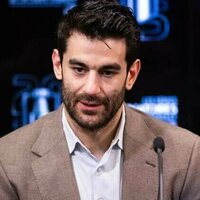


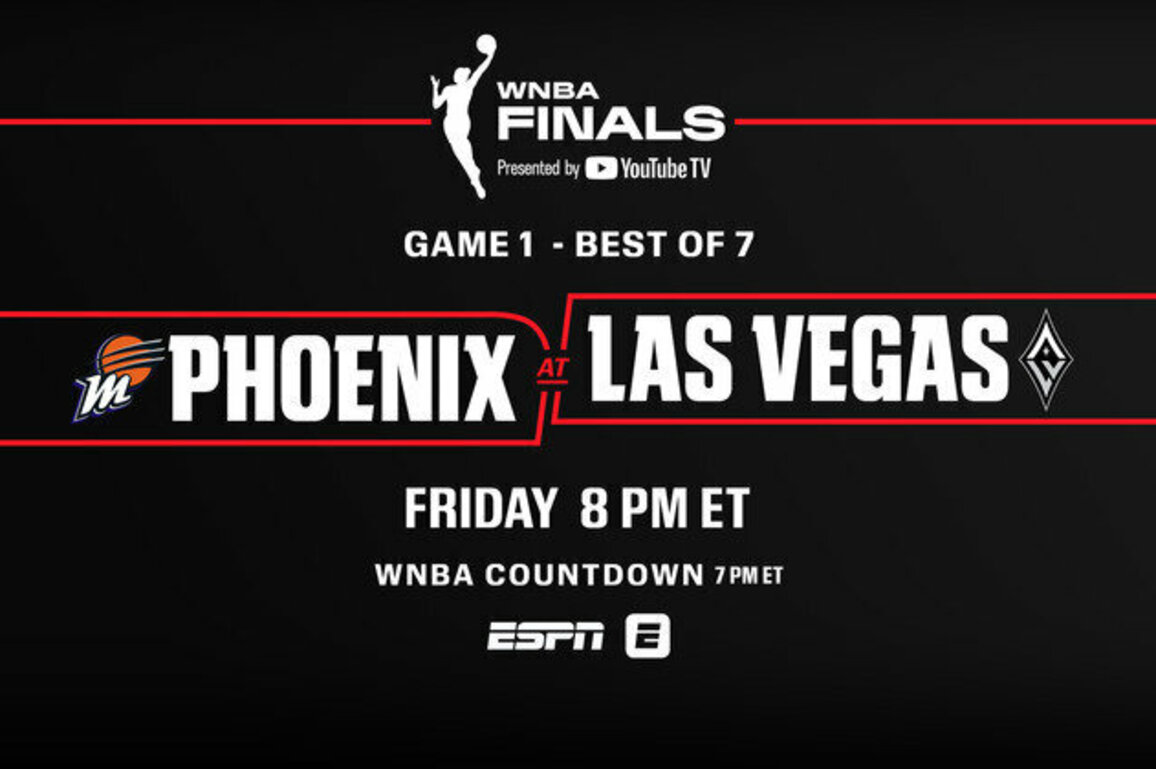
ESPN's WNBA commentators Ryan Ruocco and Rebecca Lobo answered questions on Thursday via Zoom to preview the 2025 WNBA Finals on ESPN and ABC.
ESPN, which has presented the WNBA since the league's inception in 1997, will once again feature the WNBA Finals during its 29th season, in addition to being the exclusive home of the entire WNBA postseason. The WNBA Finals begins on Friday, October 3rd on ESPN featuring Phoenix Mercury visiting the Las Vegas Aces. ESPN's team will be led by the main crew of veteran play-by-play commentator Ryan Ruocco, Naismith Memorial Basketball Hall of Famers Rebecca Lobo and Holly Rowe - for their 13th season together.
RYAN RUOCCO: I think it depends on how the games unfold. We'll certainly always be prepared to touch upon bigger-picture issues or news stories if think find their way to relevancy during the game. I think that is kind of determined by what we see and what we hear throughout the course of the game.
Like, for example, when the All-Stars wear the shirts they wore regarding the CBA at All-Star, obviously that means we're going to address that in some way during the game, right? Otherwise, I think, you know, a lot of times these sort of more broad, newsy subjects get more fully dissected in studio.
I think you've seen that across all our studio shows at ESPN, but also Elle, Andraya, and Chiney I'm sure will be spending time on anything like this that may come up. So it's not like we're going to be avoiding things, Jon. That's not it. It's just a matter of what's natural throughout the course of a game.
REBECCA LOBO: The only thing I would add is that's how we went into Game 5. Our plan is to talk about this incredible action that's going to be in front of us, the magnitude of this game and what it means.
If something happens during the game that it's natural for us to go there and it's right in that moment for us to go there in terms of big-picture stuff, we will, but our priority is to talk about the action that is happening in front of us and to do right by what's happening on the court.
REBECCA LOBO: Well, a couple of things. One, when you talk about the list of commissioners, the relationship between players and the Commissioner is always most contentious during CBA negotiations. That's just how things are in life.
I think you have to have the backdrop of some things that are being said this year, it's because these two sides are in negotiations where they haven't been in the past.
When you look at how the league has grown, yes, the metrics tell you that it has grown considerably under Cathy's leadership. Whether that's viewership, whether that's the experience in the arena, whether that's the number of fans that are coming to watch the game, revenue in terms of what she has done on the business side, it has absolutely grown. But those aren't any of the things that Napheesa Collier was talking about, right?
So I do think you do have to give credit where credit is due and then try to understand by talking to the players what are the other frustrations that they might be feeling.
REBECCA LOBO: Specifically, like, is that good for the game?
REBECCA LOBO: Sure. I would say this, Richard, I don't think we're trying to shy away from talking about it. Ryan talked about a lot of these topics yesterday on the podcast with Sue Bird. I'm willing to talk about this. I think in-game it can get a little bit tricky.
Even Game 5, for example, I am just about to talk about the fifth call on Aliyah Boston, which I didn't think was a great foul. I'm about to go there. Kelsey Mitchell goes down in the story as different. I don't know that we can necessarily, unless it's the exact right moment in a game, know that we're going to have the time to give to a topic that deserves more than maybe a 10 or 15 second thought.
So I don't think any of us are shy about sharing our opinions. I think during the game, it really is going to be dictated by the action. Unless there's like a monitor review, unless there's a sign in front of us in the crowd and a lull in the action where we can give the topic its due, I don't know that we would just go there, if that makes sense. Especially because we do have a pre-game show where they can give a little bit more robust conversation, more thoughtful conversation, more time to the conversation.
Ryan, I don't know what your thoughts are on this.
RYAN RUOCCO: I think what you said is spot on, partner. I think, Richard, like none of us would shy away from it, and I think it's part of the reason why we do things like this, right?
I also think that if there was the moment within the game where it feels like we do have that proper opportunity to address things or something has stimulated it being very relevant in that moment during the game, that we're always prepared for that and not shying away from it.
To Rebecca's point, it's hard to get into like a flushed-out, nuanced conversation while the action is zipping up and down, especially during games that have great import. But to your point, I do also think there's space for certain things become big enough that they do need a moment in the game.
Just as an example, you may have seen during Game 4 of our series between Indiana and Vegas, we had thought in the aftermath of what happened with Sheryl at the end of Game 3 on that play with Napheesa, we had thought, hey, you know what, we should try and see if there's a moment during the game where we can even come on camera and have Rebecca - me tee up Rebecca just for what the coaches do want to see from the officiating, what they do want to see change.
So we were kind of looking for a way to get there during the game, so it was still relevant, and we used a monitor review to then get on camera and talk about that. My perspective on that is I do think that when you talk about credibility in the space, I believe Rebecca Lobo is the most credible person to speak on these issues that we have with a microphone covering the WNBA.
So there are moments where even for me just thinking, like, you know, a producer, I'm, like, hey, I want us to help create this moment for Rebecca to be able to use what I think is a really measured, intelligent, credible voice and perspective on this to an audience that wants to hear that.
Obviously I believe Holly and I also have the credentials for that, but Rebecca I think stands apart from us even when it comes to that.
I think that's the kind of thing where some of it's timeliness too, right, Richard? If something just happens, then you may be more compelled to address it in that moment. If it happens three days before, you may be less compelled, but I don't think we would avoid it. I think it's just a matter of is there a right moment, and is this the right time within a game?
REBECCA LOBO: I think I was as surprised as anybody else. We were at shoot-around for Game 5 between Vegas and Indiana, and Steph White was the one who said to us, Have you seen Napheesa's comments? We were at shoot-around, so we had not yet.
Having a chance to go back and watch, I was a little bit surprised because we haven't seen that kind of conversation before from a player in the WNBA in terms of, you know, the league leadership, but we have seen even before the bubble, but especially in the wubble and since 2020, players standing up and speaking out and having a lot of confidence in doing that. Especially when they feel like they're not just speaking out on behalf of themselves, but they feel like they're speaking out on behalf of their teammates or the body of players as a whole.
So this is the next iteration, I suppose, of that as players speaking up on their behalf, on the behalf of the rest of the union membership of something that they feel. It's one of the things that's been interesting, and it's been watching Napheesa kind of find her voice in the course of her career, especially now as she's part of the union leadership during the CBA negotiations and really taking a leadership role in that.
RYAN RUOCCO: That's a good question. I think there's certainly a human element to some of this, right? It's why coaches do what they do after certain games and series complaining about calls and then we see things go the other way the next game. That definitely happens and is strategic because people know that the officials are human, which of course they are.
I would say I don't know exactly how it will affect, if it will affect, how these finals are called or not. I think what has been probably a little discouraging to the players and coaches who have...
I think that what's frustrated the players and coaches, Emily, is that it feels like instead of them being told, Yeah, you know what, there are some issues we should all think about how we can address, it feels like they've kind of been, you know, just dismissed or, like, Hey, these are excuses after you are losing. I'm not saying this is the words that are being told to them, but it's the sentiment or, you know, people are very defensive.
I think that there's enough of a collection of people now in this sport between decorated coaches and players and otherwise who have voiced similar concerns about the way the game is officiated, how physical it is, that the prudent thing to do would be to have some level of league leadership, whether you are talking about the head of officials, whether you are talking about the commissioners, whether you are talking about the competition committee.
What I would advise them is I would have one of those bodies come out and say: Hey, we've heard the concerns. While we don't agree with all the complaints, clearly there's a consensus amongst the players and the main figures in the game that makes us want to address this. We look forward to having creative and productive conversations about how we can best display our sport moving forward.
I think something like that would go a long way to mollify some of the festering concerns and boiling anger from the frustrated parties, but I think what they haven't gotten both on an individual basis when they're communicating with the league or from a broad perspective is an acknowledgment that their concerns are valid. I think that's why it's gotten to this point.
From my perspective, when it comes to the way the sport is officiated, their concerns are valid. I absolutely think they are.
Now, for us, I will say I think everybody in the officiating department is wonderful to deal with. They're great with giving us feedback. They couldn't be more accessible, and I'm really grateful for that.
From the way this sport is overall officiated and kind of what goes on, I absolutely think there needs to be more of an emphasis on freedom of movement, and I think the example that best displays that is Paige Bueckers talking to us before Dallas' game against Indiana in August and telling us that she has had to learn how to defend while fouling, because in college she couldn't get away with that. Here she realizes she can, so she has to adjust to that.
To me, if I'm in a position of leadership and I hear a comment like that, rather than be defensive, I want to get curious, and I want to say, Wow, why is Paige Bueckers saying that? She's fresh off of college. How different is this?
I think there needs to be a level of openness and curiosity around what is now a common thread of concern from players and coaches when it comes to the way games are being called or not called.
REBECCA LOBO: I'm just going to add quickly on that. I've had many conversations, and not just during the playoffs, but started early in the season when you started hearing some of those concerns, many conversations with coaches, and there's a common theme. Number one, freedom of movement, and number two, consistency not only within a game, from game-to-game. All of the coaches are unified on this.
The offseason would be a perfect time to say, These are the things that we're going to focus on. We all see it. If you watch women's college basketball and you watch the WNBA, what is allowed to happen without fouling - and we're talking off the ball here - is drastically different. Everyone wants that to change.
Well, why do the players still do it? The players still do it because they are allowed to do it, and when their opponent does it and it gives them an advantage, they're going to do the same thing.
Players adjust quickly. If the whistle was officiated - if things were officiated differently at the start of next season, there might be a small period of time where you're getting so many fouls called that it becomes maybe unpleasant to watch. That won't be a long period of time. Players will adjust. They've been doing this a long time.
They played a certain way at the college level. They learned how to defend without fouling. They learned how to move without getting fouled. I think that is the biggest thing that needs to happen.
The coaches and the players need to have a voice in that with the league and with the officials. I do think it's something that can be cleaned up because everyone is unified in what they want in that regard.
RYAN RUOCCO: I don't know how it will affect Unrivaled season. That I'm not sure. I mean, I don't think anything as far as materially in the WNBA CBA is going to affect how Unrivaled is doing their business, because their season is in the W's offseason. Even if the calendar footprint was to grow a little bit with a new schedule, I don't think it would grow enough to infringe on the dates that Unrivaled happens.
So I don't know that it materially affects it, but I would say this. I think both parties, the players and the league, should understand that a CBA has to get done. Everything is moving in the right direction. It would be a historic own goal to end up having no basketball when you have everything moving in the right direction.
I believe that's why a deal will get done because I think when something so obvious needs to happen, cooler heads prevail, and we have smart people on both sides who will end up letting that rule the day rather than whatever emotions are existing now.
We've heard Cathy talk about wanting to have a transcendent collective bargaining agreement where the players do get significant raises. Obviously we know what the players want. So I think it would be detrimental to the sport to have any kind of work stoppage. I'm not talking about offseason. That's fine. That's different. But missing games, detrimental.
I think both sides should appreciate that and allow that to motivate them to get a deal done.
Source: ESPN